
Rust & Irrigation Stain Removal in Lakeland, and Why the Orange Comes Back
Orange arcs near your sprinklers are iron from the water, not dirt, so a regular wash won't touch them. We take the rust off with a treatment made for it, and we'll tell you honestly whether it's coming back.
- 5.0 stars on Google from 45 reviews
- Owner Steve Schwarz on every job
- $1M general liability insurance
- Missed a spot? Back free within 90 days
Is It Rust? Check the Shape
Irrigation stains don't show up as random spots. They show up as arcs, fans and stripes that match exactly where your sprinklers hit. If you can stand by a sprinkler head and trace the curve with your finger, you've found the cause.
According to UF/IFAS, most Florida well water is high in iron, and it leaves rust on anything it touches. When that water dries on your stucco, concrete or pavers, the iron meets the air and turns orange. Every watering cycle adds another thin layer.
Look for:
- Curved orange or brown bands low on the walls, at sprinkler height
- Fan-shaped stains on the driveway, sidewalk or pool deck next to a head
- Darker color closest to the head that fades with distance
- Streaks on fences, mailbox posts or light-colored pavers in the same pattern
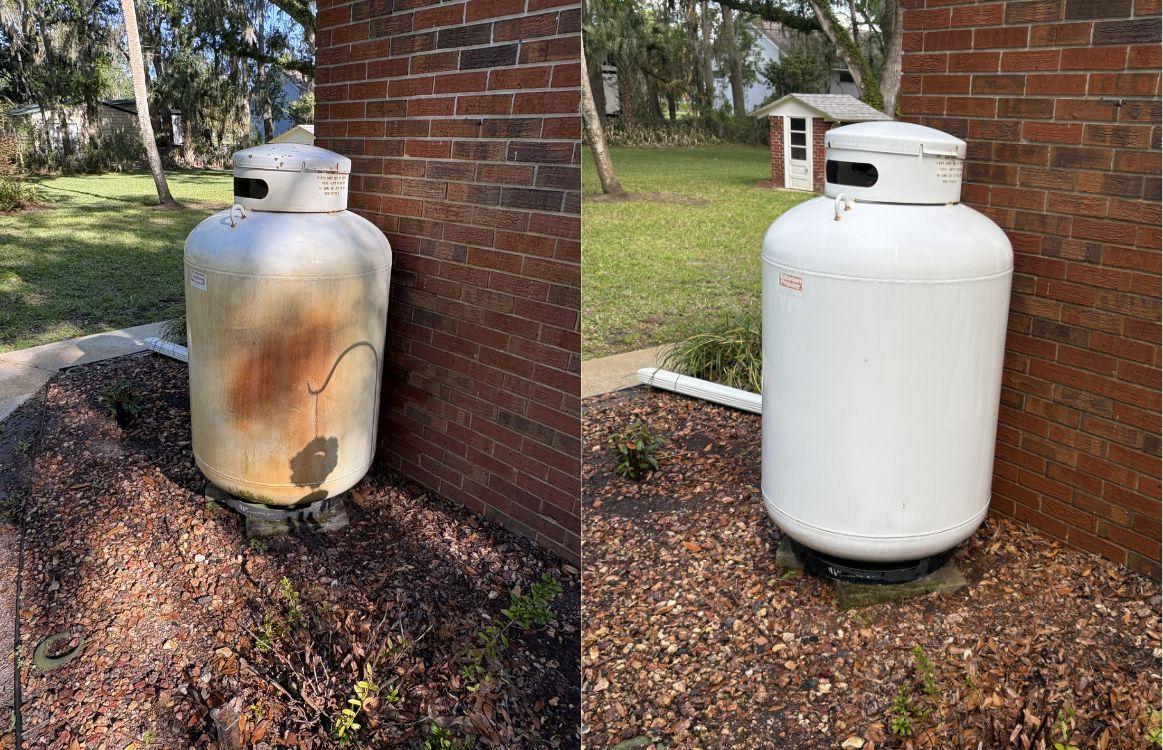
A few look-alikes to rule out: small scattered orange dots are usually fertilizer granules. Green or black growth is algae, a different problem with a different fix. Reddish smears at the base of a wall after a heavy rain can be dirt splashing up from the beds.
Why a Driveway Wash Doesn't Remove It
Most house and driveway washing uses chlorine, because chlorine kills algae and mildew. Chlorine doesn't dissolve rust. Rust needs a product made to break down iron.
That's why people pay for a driveway wash and still see the same orange fans that evening. Nobody skipped the spot; it was the wrong tool. The orange can even look worse afterward, because the concrete around it is suddenly brighter.
Blasting harder doesn't help either. It can scar concrete and etch stucco while the stain stays put.
"He was able to remove all mold, oil spots and rust spots in our driveway."
We Remove the Stain. The Source Is a Different Job.
We take the orange off your walls, driveway and pavers. We don't fix sprinklers, re-pipe irrigation or treat well water. If the same head keeps spraying iron-heavy water on the same wall, the orange will creep back, and how fast depends on how often the system runs and how much iron is in the water.
Who fixes the source:
- A head spraying the house or driveway: you can often turn the nozzle or adjust the arc yourself.
- Heads in the wrong spot, or beds against the wall: an irrigation contractor can move heads or switch those beds to drip.
- Lots of iron in the water itself: UF/IFAS suggests testing it first (the county Extension office can point you in the right direction). Treatment options include water softeners and oxidizing filters.
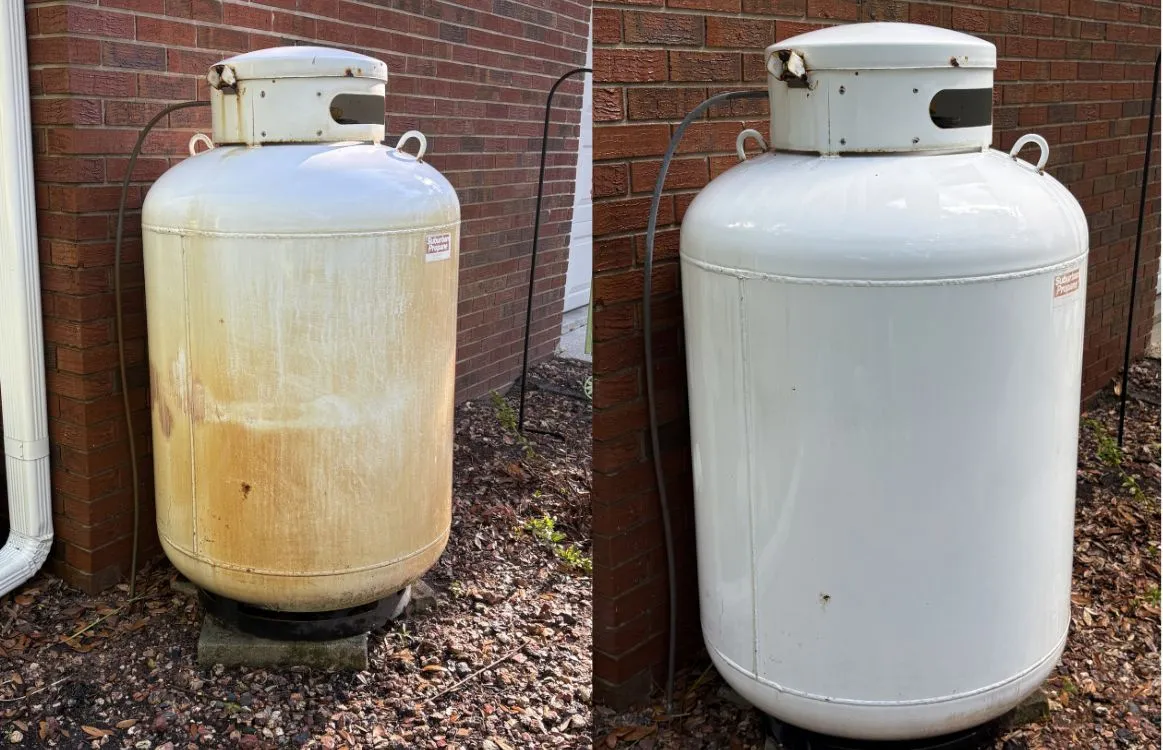
Do It in This Order
- Fix the spray so it stays off the wall and the concrete.
- Remove the rust.
- Seal the pavers, if you're sealing. Sealer locks in whatever is on the surface, so rust has to come out first.
The one time to clean first is a deadline, like listing the house this month. Just know the stain may need doing again if the water source hasn't changed. That isn't a failed job. It's iron in the water.
Rust Removal and Lakeland's Water Restrictions
The City of Lakeland is under Phase III water shortage restrictions through March 31, 2027. Washing just for appearance isn't allowed inside city limits. Washing to remove mold, mildew and safety hazards is, and so is prep for painting or sealing.
Rust removal inside city limits has to fit those rules. We'll look at your job and tell you up front how it fits, often alongside mold and algae removal or as prep before sealing.
What Rust Removal Costs in Lakeland
| Job | Typical price |
|---|---|
| Typical driveway (flat rate) | About $150 |
| Typical sidewalk (flat rate) | About $100 |
| Larger, older or multi-surface stains | $175–$550 |
What moves the price: stain size and age, the surface (concrete, stucco, pavers), how many treatments it needs, and whether well-water irrigation keeps adding to it. Rust removal is part of our pressure washing service in Lakeland, and it's often done on the same visit as a driveway or house wash.
Our 90-day promise covers spots we missed. Fresh rust from a sprinkler that's still hitting the wall is new staining, and we'll tell you that up front, before the job starts.
Frequently Asked Questions
Will the rust come back after you clean it?
It can, if the same sprinkler keeps spraying iron-heavy water on that spot. Fix the spray or treat the water, and the clean surface stays clean much longer.
Can you tell rust from something else before you start?
Yes, that's the first step. Rust is orange or brown and follows the spray pattern. Algae is green or black and feels slick when wet. They need completely different products.
My sprinklers hit the house. What should I do first?
Get the spray redirected before you book a rust cleaning. Turn the nozzle yourself, or have an irrigation company adjust or move the head.
Get the orange off, and know whether it's coming back.
See your price in about a minute. Steve will check the stain, and the sprinkler that caused it, before any product goes on.

Contact Us

Reliable, professional pressure washing services for pristine results.

