
Paver Sealing in Lakeland: Cleaned and Dried First So It Won't Turn Cloudy
Most cloudy, peeling paver sealer in Lakeland isn't a bad product. It went on over pavers that were still damp or never fully cleaned. We kill the algae down in the pores and joints, refill the sand, and seal only once the pavers are dry.
- 5.0 stars on Google from 45 reviews
- Owner Steve Schwarz on every job
- $1M general liability insurance
- Missed a spot? Back free within 90 days
Why Paver Sealer Turns Cloudy, and How We Keep It From Happening
When sealer turns milky white or starts to peel, the cause is almost always what was under it. Moisture trapped in the pavers, live algae in the joints, or a rust stain nobody treated all get locked in once the coat goes on. Then the only fix is stripping the sealer and starting over. The paver industry's own guide to cleaning and sealing pavers says the same thing: sealer can turn white when the pavers or joints aren't dry, when it doesn't breathe, or when it goes on too thick.
Lakeland makes this easy to get wrong. The ground here holds a lot of water, and from May through September the afternoon storms can soak a patio right after the morning looked bone dry. If your home backs up to one of Lakeland's lakes or a retention pond, the pavers can stay damp longer still. Pavers can look dry on top and still hold water underneath.
So the work is mostly prep:
- Kill the growth, not just the color. We clean with pool chlorine diluted to the right strength for pavers. It kills the algae in the pores and the joints, so you're not sealing living growth under a shiny coat. Your plants get wetted down and protected first.
- Treat stains before they're locked in. Orange rust from well-water sprinklers and oil spots come out before any sealer goes down.
- Wait for dry. Pavers need at least 24 hours with no moisture before sealing. If they're still holding yesterday's rain, or a storm is coming before the coat can set, we move the date. A rushed seal is the one that clouds.
- Never a heavy coat. We use Ure-Seal, made by Innovative Concrete Technologies right here in Lakeland, and it goes on evenly, never thick. A heavy coat is one of the main reasons sealer clouds.
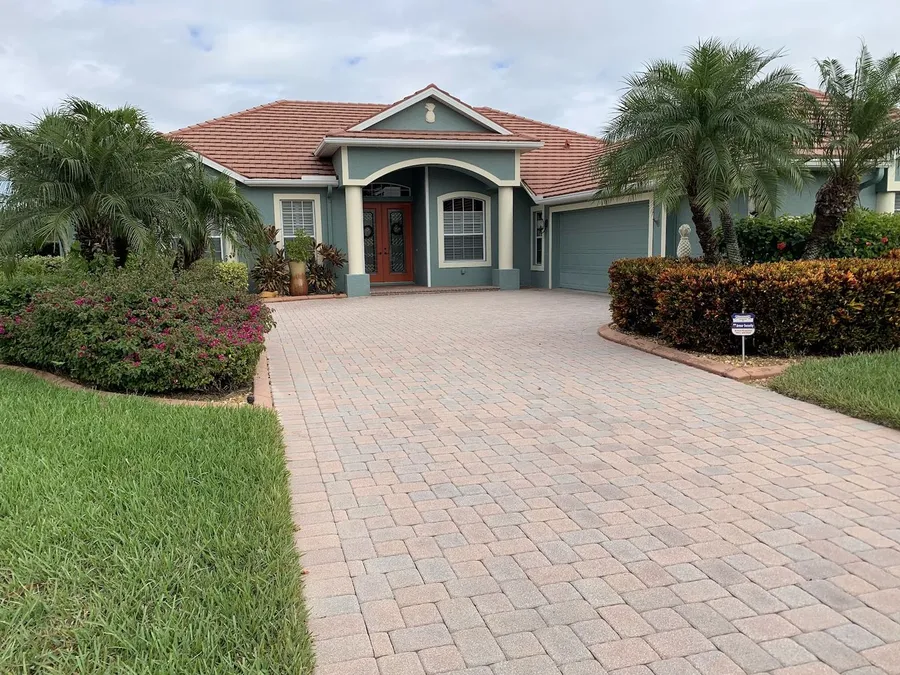 Before
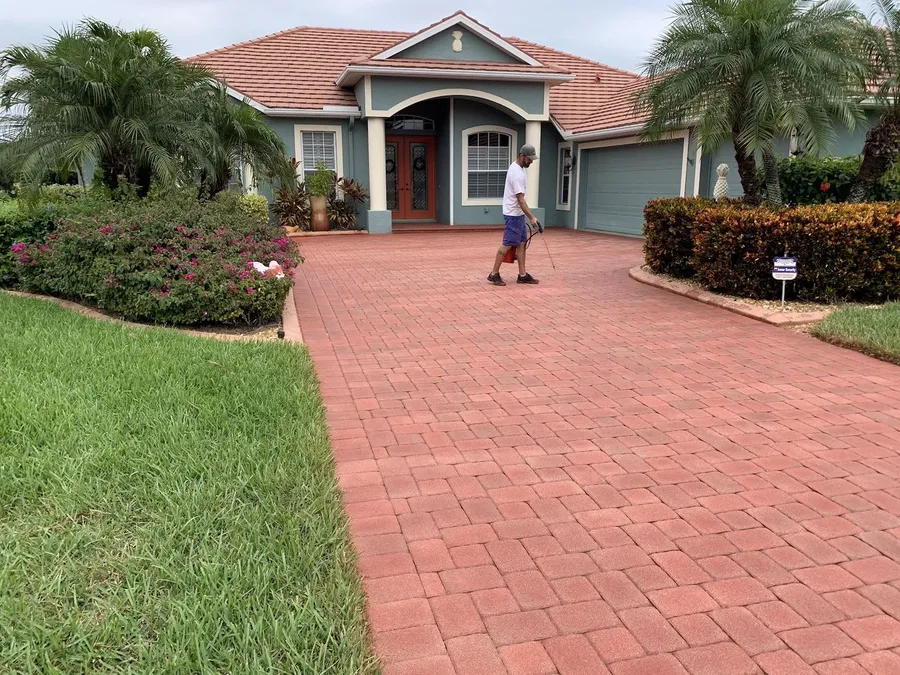 After
"I am very pleased with the power washing, sanding & sealing job that was just completed by Kraken The Pressure."
What a Paver Sealing Job Includes
Here's what happens, in order:
- Walk it with you. Steve looks for loose or sunken pavers, old sealer, stains and low joints, and checks where water runs after a storm.
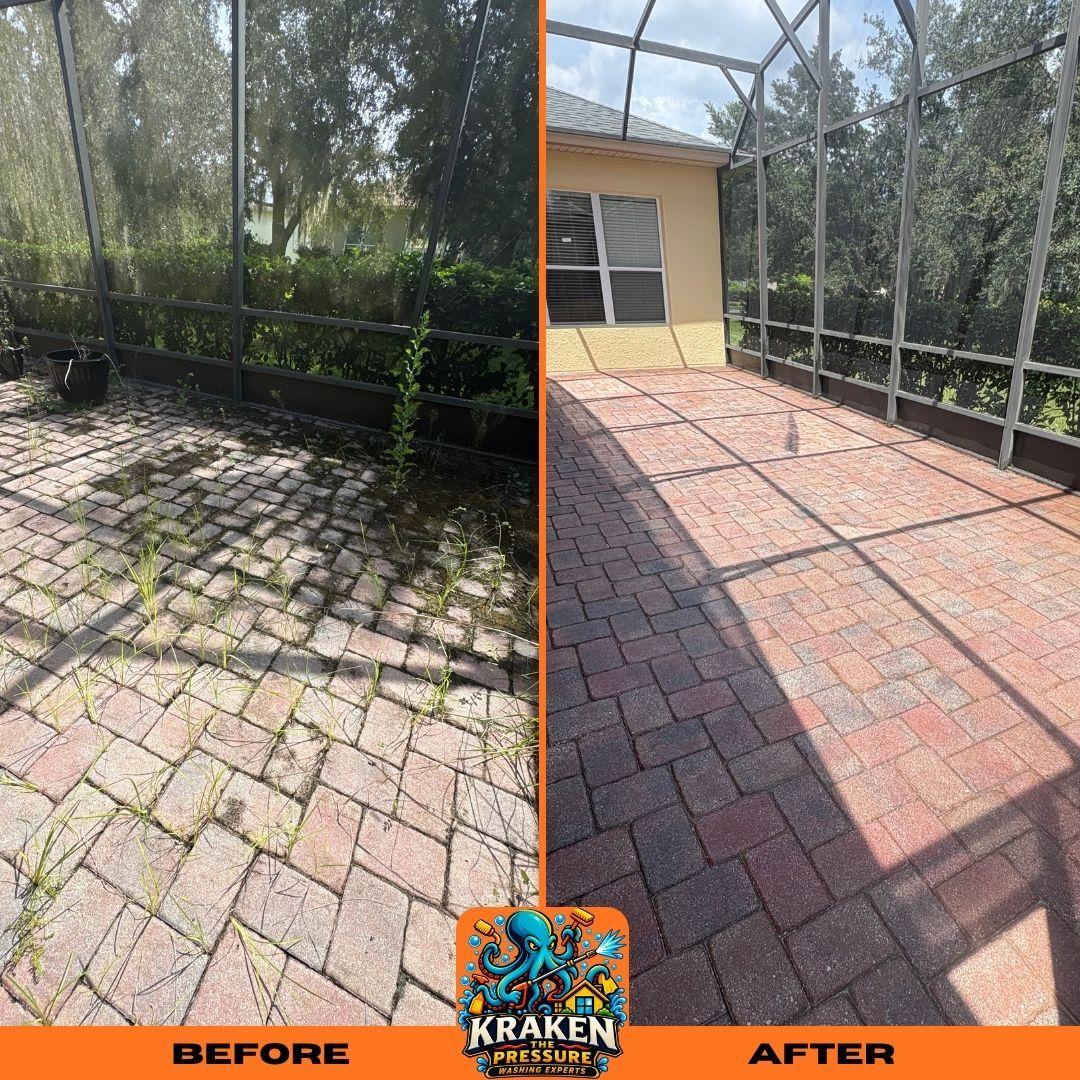
- Clean to the root. The chlorine mix kills the green and black growth in the pores and joints, and a careful rinse carries it off without blowing out the sand.
- Treat stains. Rust and oil spots get their own treatment.
- Re-set the few that need it. A handful of sunken or rocking pavers can be lifted and re-set.
- Let it dry. The pavers need to be dry all the way through before sealing. Sometimes that means sealing on a second day.
- Refill the joints. Cleaning pulls sand out, so fresh joint sand goes back in to lock the pavers and give weeds and ants less room.
- Seal. An even coat, never a heavy one. Then give it about 3 hours before light foot traffic and 72 hours before anyone drives on it.
Steve, our owner, has a background in this. Before Kraken, he ran his father's roofing crew and did excavation and pool digging, so he knows how grade and drainage work under a patio. That's why he checks where the water goes before he seals anything.
What we don't do: full re-lays. If a whole section has sunk or the base has washed out, you need a paver installer first. As Steve puts it, "I'm not a jack of all trades." We'll tell you if that's what you're looking at.
"Steven has been phenomenal to work with, whether power washing or replacing and sealing our pavers, his work is outstanding."
What Paver Sealing Costs in Lakeland
Paver sealing runs $1.20 to $3.00 per square foot. That price includes cleaning, joint sand and sealer, not just the coat.
| Area | Approximate size | Typical price |
|---|---|---|
| Small patio | 300 sq ft | $360–$900 |
| Pool deck or larger patio | 600 sq ft | $720–$1,800 |
| Driveway | 1,000 sq ft | $1,200–$3,000 |
What moves the number:
- Size. Larger areas cost less per square foot.
- Condition. Heavy algae, old peeling sealer that has to come off, or rust and oil stains add time.
- Pool decks. They usually run 10–20% more because of the extra care around the pool and cage.
- Color revival. If the pavers need their color brought back with a color-enhancing sealer and a few re-sets, that's paver restoration, at $1.50 to $3.50 per square foot.
- Bundling. Paver sealing pairs well with the rest of our pressure washing in Lakeland. Add a house wash or driveway cleaning in the instant quote and each added service takes a little more off.
When two quotes are far apart, ask what each one includes. A low price for "sealing" often leaves out the cleaning, the sand, or the drying time, and that's how you end up paying someone to strip it next year.
When to Seal, and When to Wait
In Lakeland, the best time to seal is usually the drier months, October through April, when the pavers can dry out between visits. Summer sealing works too, but it means watching the afternoon storms and being willing to move the date.
Wait, or fix something else first, if:
- The pavers are new. Fresh pavers can push a white, chalky film to the surface for months. Sealing too soon traps it. Ask your installer how long to wait.
- Water still beads up. Splash a cup of water on a few pavers. If it beads, the old sealer is still working. A cleaning will do for now.
- A sprinkler keeps hitting the pavers. Turn the head first, or the orange rust comes right back under the new coat.
- The pavers are sinking or holding puddles. Sealer won't level anything. Fix the base or drainage first.
Don't wait if the joint sand is washing out, weeds and ants are moving in, or the pavers soak up water and stay dark. Every rainy season after that pulls more sand and lets more growth in.
Wet Look or Natural: Pool Decks vs. Driveways
A wet-look finish brings faded color back and leaves a shine, like the pavers were just hosed down. A natural finish soaks in and looks close to bare, just richer.
- Pool decks: lean natural or low-sheen. People walk on them barefoot and wet, and a glossy coat can feel slick. Ask about an anti-slip additive if you want some shine.
- Driveways: wet look is the popular choice for color. It can show wear in the tire paths sooner than a matte finish.
- Front walks used by older family members: lean natural, especially on shady stretches that stay damp.
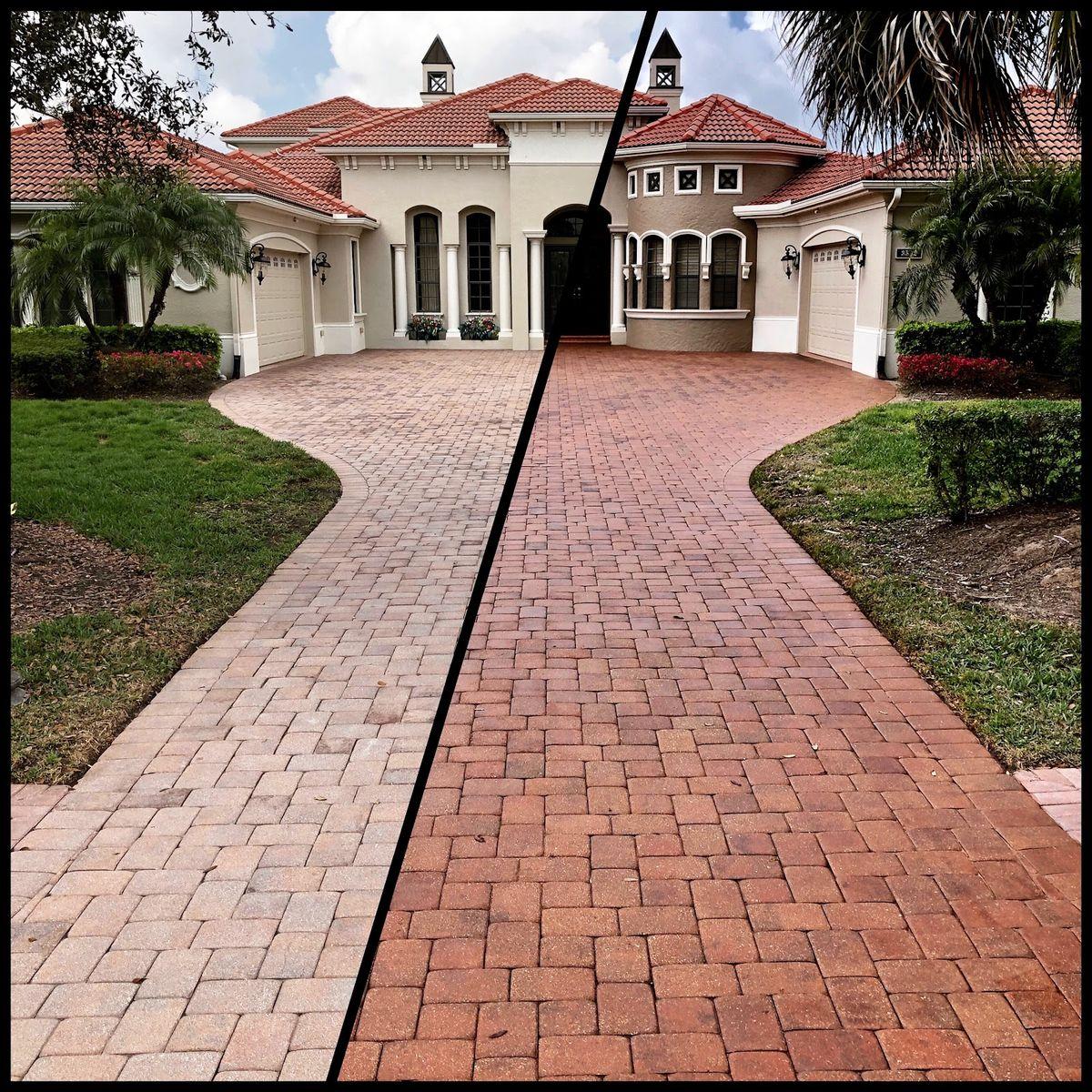
"The pool pavers and driveway look incredible!!"
What to Expect When You Book
You get a price first. The instant online quote shows your number before anyone comes out.
Then you'll know exactly when we're coming. You get a text a week before, a text the day before, and a text when we're on the way with an arrival window. If we're running late, Steve texts you himself. Lakeland jobs are usually scheduled Friday through Sunday. Turn your sprinklers off from cleaning day until the sealer is dry.
On the day, it's Steve on site with his assistant, and sometimes his wife. When the job is done, Steve walks it with you before he leaves. If we missed anything, we'll come back and fix it free within 90 days.
You can pay by cash, check, Venmo, Cash App, Square or credit card. Veterans and their direct household get a discount.
"Pavers cleaned. Service was excellent. Pavers look great. Steve is very professional and explained about the care and maintenance of the pavers as well as the exterior of the house."
Frequently Asked Questions
How long before I can walk or drive on sealed pavers?
About 3 hours before light foot traffic, and 72 hours before you drive or park on it. Steve confirms the timing for your job before he leaves.
My pavers already look cloudy from an old seal. Can that be fixed?
Often, yes. A milky haze usually means moisture got trapped under the old coat, so pressure washing alone won't clear it. The old sealer has to be stripped and the pavers dried before a new coat goes on. Mention it when you request your quote so it's priced in.
How long does paver sealing last in Lakeland?
It depends on sun, shade, foot traffic and how the pavers were prepped. The water test tells you: when water stops beading and soaks in, it's time to reseal.
Do you re-lay pavers?
No. We re-set a few sunken or loose pavers as part of the job, but full re-lays need a paver installer.
Find out what your pavers need before anyone seals anything.
Get your price in about a minute, pick a day that works, and Steve will tell you on site if your pavers are ready to seal, or what should happen first.

Contact Us

Reliable, professional pressure washing services for pristine results.

