
Brick Cleaning in Lakeland: Gentle on Mortar, Matched to the Stain
Brick looks tough, but the mortar between the bricks isn't. We figure out what the stain is first, then use the right cleaner at low pressure so the brick comes clean and the joints stay put.
- 5.0 stars on Google from 45 reviews
- Owner Steve Schwarz on every job
- $1M general liability insurance
- Missed a spot? Back free within 90 days
Why High Pressure Is the Wrong Tool for Brick
Most folks figure brick is the toughest thing on the house, so it can take the biggest blast. That's backwards. Brick is baked clay full of tiny pores, set in mortar that's softer than the brick on either side. A narrow, high-pressure tip can wash out the joints and push water deep into the wall.
The brick industry agrees. The Brick Industry Association's technical note on cleaning brickwork says to use the gentlest cleaning method that works. It warns that high-pressure water is not appropriate for brick and can erode mortar joints. It also says to soak the wall with water before any cleaner goes on and not to let the cleaner dry on the brick.
So the work leans on chemistry, not force. Steve, our owner, puts it this way: "If you truly treat it like a business, you kind of have to be a chemist." The right cleaner soaks into the pores and does the work. A low-pressure rinse carries it away.
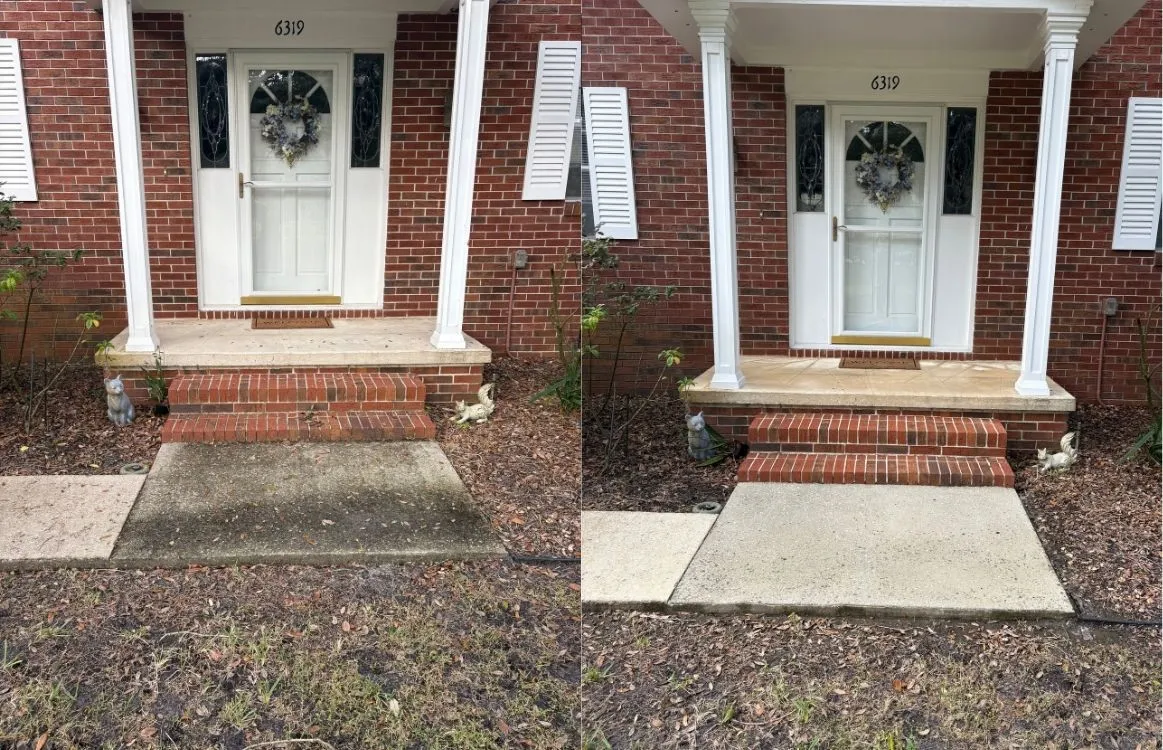
Know the Stain Before Anyone Cleans
The wrong cleaner on the wrong stain wastes your money or makes it worse:
- Green, gray or black film, often on the shady side: algae or mildew. A properly diluted chlorine mix kills it.
- White, chalky, powdery streaks: usually salts working out of the brick as moisture dries. Bleach won't fix it. Light deposits often brush off, but the water getting into the wall needs fixing first.
- Orange or brown splotches low on the wall: often rust from sprinkler water with iron in it. That needs rust removal, not a brick wash.
- Dirt and cobwebs under the eaves: plain grime that rinses off once loosened.
Describe the stain or send a photo when you ask for a quote. It tells us whether you need a cleaning, a rust treatment, or a mason first.
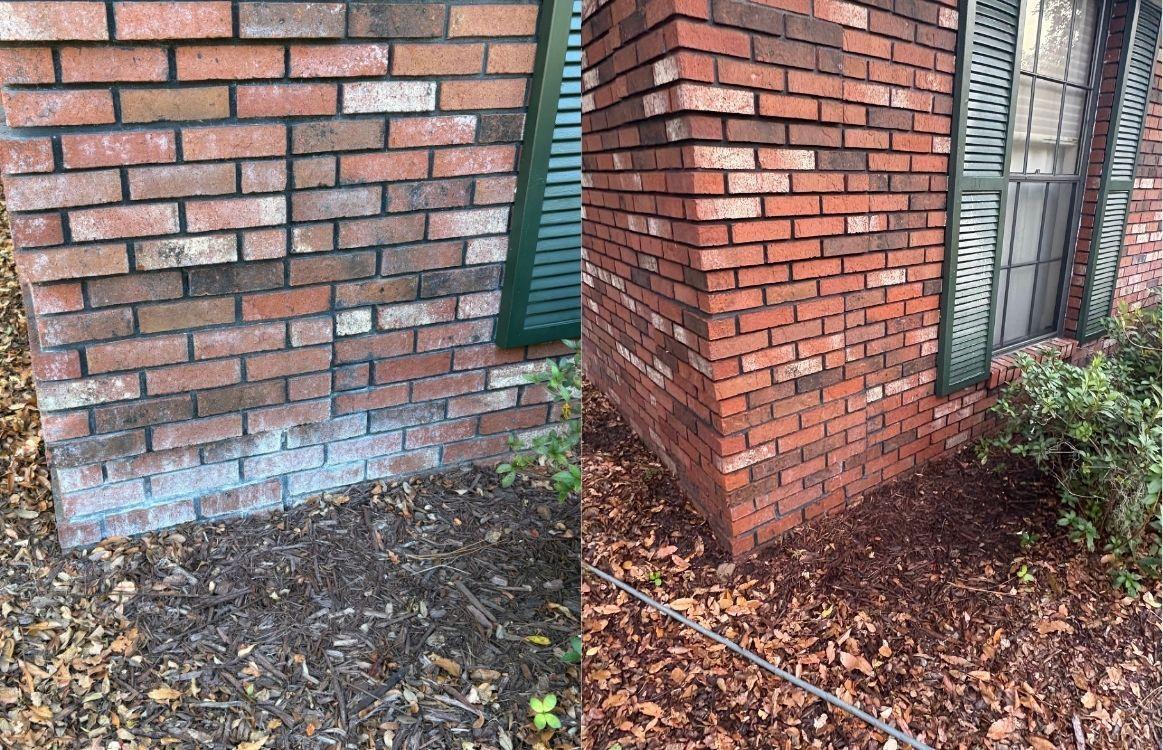
Lakeland's Older Brick
Lakeland has seven historic districts, including Dixieland, East and South Lake Morton, and Beacon Hill. Many of their streets are still lined with mature oaks, and some brick streets remain. That canopy keeps walls, steps and porch columns shaded and damp, which is exactly where algae and mildew settle in.
Older brick and mortar are often softer than new, so gentle matters even more. If your home is a historic building, the Brick Industry Association recommends that cleaning be overseen by a restoration specialist. We'll say so if that's where your project belongs.
"I appreciate the quality of the work, and his serious approach on how the job is to be done."
When to Fix Something First
Cleaning is the wrong move, or the wrong move right now, if:
- The mortar is crumbling. If a key scrapes sand out of a joint, call a mason first. Even a gentle rinse sends water into those gaps.
- The brick face is flaking off. That's damage, not dirt, and it's a repair question.
- The sprinkler is still hitting the wall. The rust comes right back. Turn the head first.
- Roof or gutter work is coming up. It drops debris and dirty runoff down the walls. Clean after.
- The brick is inside the house. Fireplaces and indoor walls aren't our work. We only work outside.
If the brick is solid and the stain is on the surface, cleaning makes sense. If the brick or mortar is breaking down, or something keeps putting the mess back, fix that first.
What Brick Cleaning Costs in Lakeland
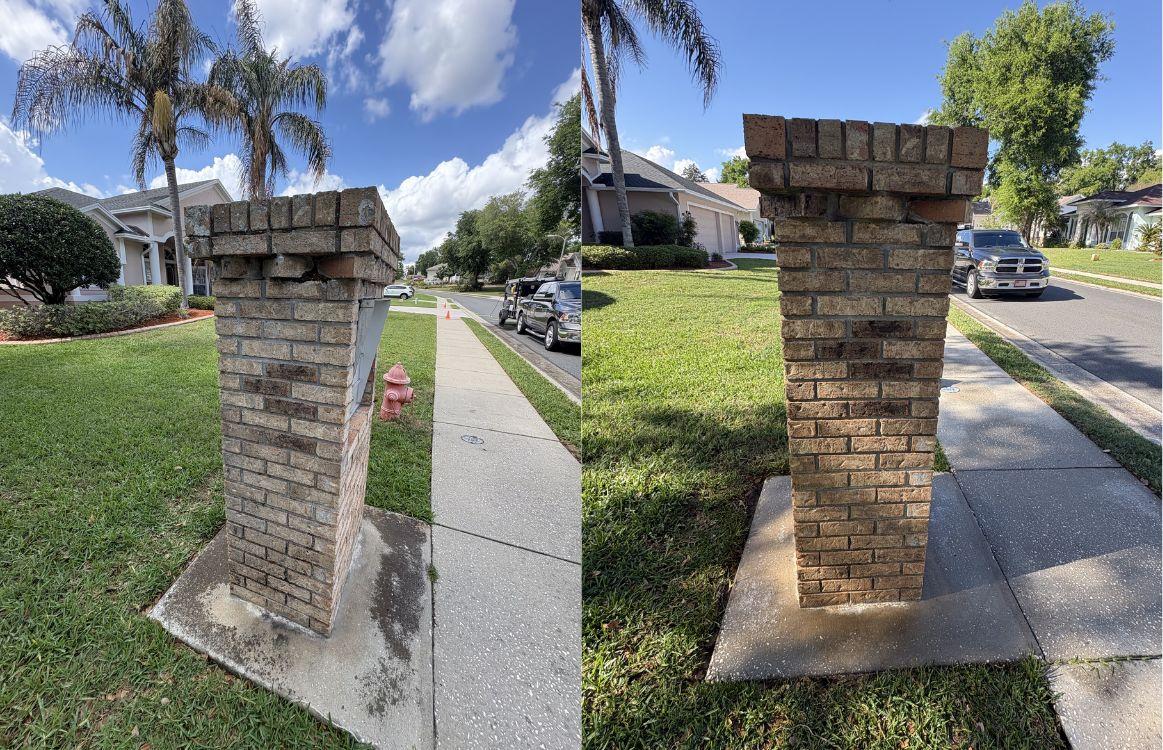
Brick cleaning runs about $0.20 to $0.50 per square foot. A 400-square-foot wall comes to roughly $80 to $200. Small jobs like a mailbox column or front steps are often added to a larger visit.
What moves the price: square footage, how heavy the staining is, white salt deposits that need extra work, mortar condition, and how gentle the job has to be. Brick cleaning is part of our pressure washing service in Lakeland.
What to Expect
You'll see your price in the instant quote and get a text a week before, the day before, and when we're on the way. Before we start, close the windows on the walls being cleaned and move cars and patio chairs a few feet away.
Wet brick always looks darker, so judge it once it's dry. Before Steve leaves, he walks the wall with you. If we missed anything, we'll come back and fix it free within 90 days.
Frequently Asked Questions
Is it normal for brick to look splotchy right after cleaning?
Yes. Wet brick looks darker and uneven. Give it the rest of the day in the sun before you judge it.
Will cleaning the brick fix a musty smell near the house?
It often helps, since algae and mildew growing in damp brick can add to that smell. If the smell is inside, that's a different problem, and it's not one a pressure washer fixes.
Can brick cleaning hurt the pavers or plants next to it?
Not when each surface gets the right method. Pavers get a gentle rinse so the joint sand stays put, and plants get wetted down and protected first.
Find out what's on your brick before anyone puts pressure on it.
Send a photo or describe the stain, and get your price in about a minute.

Contact Us

Reliable, professional pressure washing services for pristine results.

